2026-09-13 ·
Sorting Construction Debris for Recycling Near Bozeman
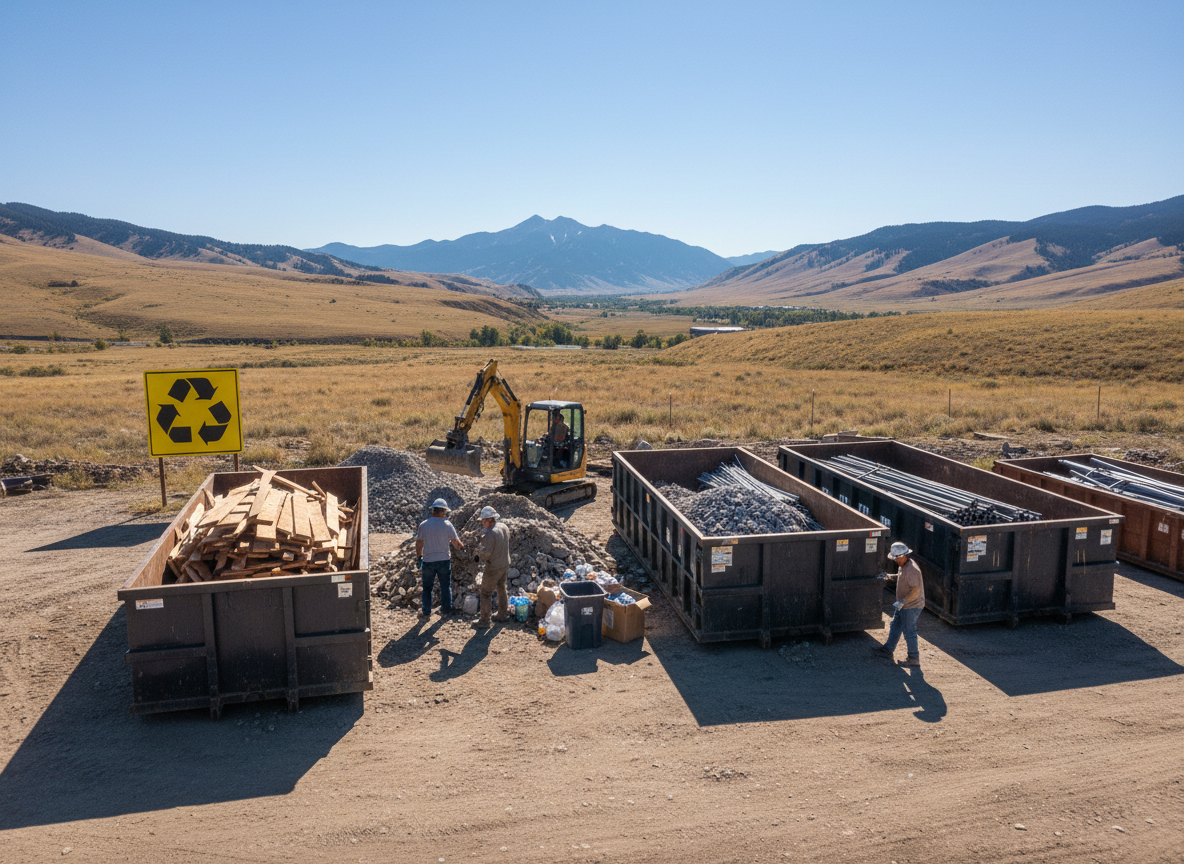
Sorting construction debris for recycling near Bozeman begins with separating clean wood, ferrous metals, concrete, and gypsum board into dedicated piles before any material enters a container. Crews working on remodels in older Southwest Montana homes often encounter mixed loads of dimensional lumber from the 1960s and newer engineered products, so early separation prevents contamination that landfills reject. Weather patterns with rapid spring thaws and summer dust also affect how long sorted piles can sit before loading.
Identifying Recyclable Materials
Construction sites around Bozeman commonly generate four main recyclable streams. Clean dimensional lumber and plywood without paint or pressure treatment can go to local wood processors. Steel studs, rebar, and copper pipe fetch scrap value when kept free of drywall dust. Concrete and asphalt chunks from foundation work or driveway removal recycle into road base once rebar is pulled. Gypsum board from interior demolition recycles into new wallboard only when paper facing stays intact and no insulation adheres. In the Southwest region, crews routinely pull these four categories first because mixed loads raise disposal fees at regional transfer stations. Older housing stock in areas like Belgrade and Manhattan often adds lead-painted trim, which must stay out of the wood pile entirely.
Sorting Process on Site
Begin sorting as soon as debris hits the ground rather than after the pile grows. Designate four ground tarps or low-sided bins labeled wood, metal, concrete, and drywall. Cut lumber to four-foot lengths so it stacks efficiently inside the roll off dumpster. Strip copper wire from conduit on the spot and place it in a separate five-gallon bucket. Break concrete into pieces no larger than twelve inches so loaders can handle them without extra equipment. Keep gypsum board flat and stacked separately to avoid crumbling that mixes with soil. On sloped lots common near Livingston and Three Forks, place sorting areas on the uphill side so rain does not wash fines into other piles. This method typically reduces landfill tonnage by thirty to forty percent on a standard residential addition.
Handling Problem Materials
Certain items cannot enter recycling streams and must stay isolated. Treated lumber, painted trim, and particleboard go straight to the landfill portion of the load. Insulation, carpet, and vinyl flooring contaminate both wood and drywall streams, so bag them separately. Fluorescent tubes and any mercury-containing devices require dedicated hazardous-waste handling at county facilities. When a job involves demolition of pre-1978 structures, test painted surfaces before sorting begins. Southwest Montana crews often stage these problem items on the far side of the site so they load last into the container. Keeping them separate protects the higher-value recyclable portions and avoids rejection fees at the scale house.
Using Roll Off Containers Efficiently
Once materials are sorted, load the roll off dumpster in layers that respect weight distribution. Place concrete and heavy items at the bottom center, then lighter wood and metal on top. This arrangement prevents the container from becoming front-heavy during transport on winding roads between Bozeman and Dillon. A 20-yard container typically holds eight to ten tons when debris is pre-sorted rather than mixed. Check the construction dumpster rental page for size options that match typical Southwest Montana remodel volumes. For multi-week projects, schedule a mid-job swap so sorted recyclables do not sit exposed during sudden mountain thunderstorms. Proper loading also reduces the number of hauls required, which matters on rural routes where travel time adds up quickly.
Local Disposal and Recycling Options
Southwest Montana transfer stations accept pre-sorted loads at lower rates than mixed construction waste. Facilities serving Bozeman and surrounding counties track material types on manifests, so crews should keep simple tally sheets during sorting. When a project generates large volumes of concrete, separate hauls to aggregate recyclers can cut costs compared with single-stream disposal. Review the cost variables for roll off dumpster rental during spring cleanup to see how seasonal demand affects pricing in the region. Always confirm current acceptance rules before loading, because rules on treated wood and drywall change with landfill capacity. Consistent sorting practices developed on Bozeman-area jobs translate directly to projects in Butte, Helena, and Anaconda where similar housing stock and terrain exist.